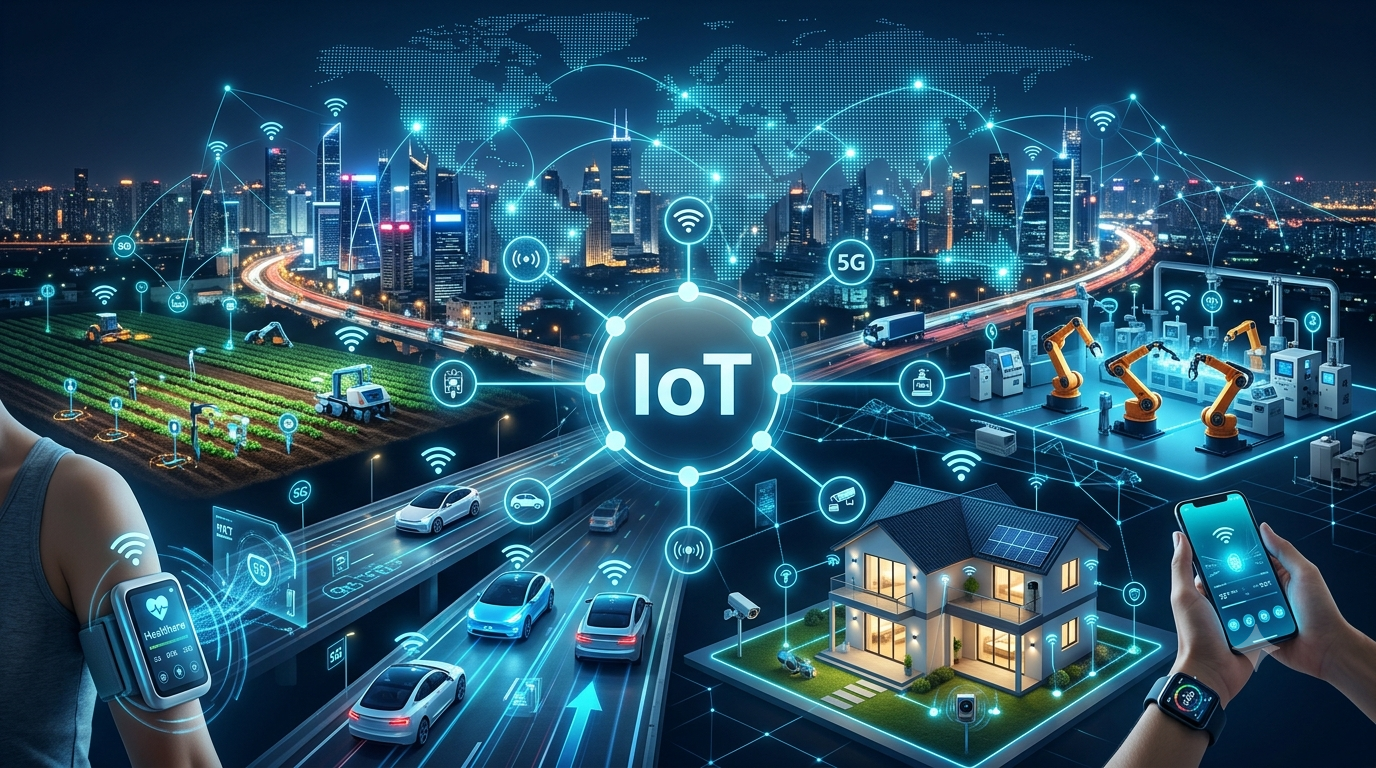
The Internet of Things (IoT) has become one of the most important technologies shaping the modern world. From smart homes and wearable devices to healthcare systems, agriculture, transportation, and industrial automation, IoT is changing how people live, work, and interact with technology.
IoT refers to a network of physical devices connected to the internet that can collect, exchange, and sometimes act on data. These devices use sensors, software, communication technologies, and cloud platforms to provide smarter and more efficient services.
What Is the Internet of Things?
The Internet of Things is a system in which physical objects are connected to the internet and can communicate data with other devices or online platforms. These objects can include smartphones, smart watches, security cameras, vehicles, medical equipment, environmental sensors, industrial machines, and household appliances.
For example, a smart temperature sensor can measure the temperature of a room and send the information to a cloud platform. A user can then monitor the temperature remotely and, in some systems, automatically control a fan or air conditioner.
This combination of sensors, connectivity, data, and automation is what makes IoT a powerful technology.
The Impact of IoT on Today’s World
1. Smart Homes
IoT has transformed ordinary homes into connected and intelligent environments. Smart lights, security cameras, door locks, thermostats, and other devices can be monitored and controlled remotely using smartphones or computers.
For example, a smart home system can automatically turn lights on when movement is detected or notify a homeowner when an unusual activity occurs. These technologies can improve convenience, security, and energy efficiency.
2. Healthcare
IoT is also making a significant impact on healthcare. Connected medical devices can monitor important health information and transmit data to healthcare professionals or online platforms.
Wearable devices can track information such as heart rate, physical activity, and other measurements. In healthcare environments, connected monitoring systems can help medical professionals access information more quickly and support better decision-making.
3. Agriculture
Modern agriculture is increasingly benefiting from IoT technology. Farmers can use soil moisture sensors, temperature sensors, humidity sensors, and weather monitoring systems to collect real-time information about their farms.
This information can help farmers determine when crops need water, monitor environmental conditions, and automate irrigation systems. As a result, IoT can contribute to more efficient use of water and other agricultural resources.
4. Transportation and Smart Cities
IoT is helping cities and transportation systems become smarter. Connected traffic sensors, smart parking systems, GPS devices, and public transportation monitoring systems can collect data that helps improve the movement of people and vehicles.
Smart city technologies can also support street lighting, waste management, environmental monitoring, and public safety. By using real-time data, governments and organizations can make better decisions and improve public services.
5. Industrial Automation
In industries, IoT is helping organizations monitor machines and automate processes. Industrial sensors can collect information about equipment performance, temperature, vibration, and other conditions.
This data can help companies identify potential equipment problems before major failures occur. This approach, often called predictive maintenance, can reduce downtime, improve productivity, and lower maintenance costs.
6. Improved Energy Management
IoT can help organizations and households manage energy more efficiently. Smart meters and connected devices can monitor energy consumption and provide information about when and where energy is being used.
This information can encourage more efficient energy use and support the development of smarter electricity systems.
Benefits of IoT
The growing adoption of IoT provides several important benefits, including:
- Automation: Devices can perform tasks with limited human intervention.
- Real-time monitoring: Users can monitor systems and environments remotely.
- Improved efficiency: Organizations can use data to optimize processes and resources.
- Better decision-making: Real-time information can support faster and more informed decisions.
- Enhanced safety: Connected sensors can detect unusual conditions and provide alerts.
- Cost reduction: Automation and predictive maintenance can help reduce operational expenses.
- Improved convenience: Smart devices make many daily activities easier and more accessible.
Challenges of IoT
Despite its many advantages, IoT also introduces important challenges. Cybersecurity and privacy are major concerns because connected devices collect and transmit large amounts of data. Poorly secured devices can potentially become targets for cyberattacks.
Another challenge is the large volume of data generated by IoT devices. Organizations need reliable systems to store, process, and analyze this information.
There are also challenges related to device compatibility, internet connectivity, maintenance, and the cost of implementing IoT systems. Addressing these issues is essential for achieving the full potential of IoT.
The Future of IoT
The future of IoT is closely connected to other emerging technologies such as Artificial Intelligence (AI), cloud computing, edge computing, and advanced wireless networks. When these technologies work together, IoT systems can become more intelligent and responsive.
For example, an IoT system may collect data from sensors, use AI to analyze that data, and automatically take action based on the results. This could lead to smarter healthcare systems, more efficient agriculture, safer transportation, and highly automated industries.
As connectivity continues to expand, IoT is expected to play an even greater role in shaping the digital future.
Conclusion
The Internet of Things is no longer simply a concept of the future. It is already influencing everyday life and transforming industries around the world. From smart homes and healthcare to agriculture, transportation, and industrial automation, IoT is helping people and organizations collect information, automate processes, and make better decisions.
However, the continued growth of IoT must be supported by strong cybersecurity, responsible data management, reliable connectivity, and effective privacy protection.
Ultimately, the impact of IoT will depend on how responsibly and creatively we use connected technology. With the right approach, IoT has the potential to create a smarter, safer, more efficient, and more connected world.